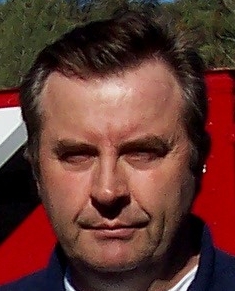
The General wants to acknowledge his counterpart, Ryan Henson, from the conservation/environmental movement for receiving a well-earned award from the USDA Forest Service. Ryan, a policy director for the California Wilderness Coalition, was presented on November 30 with R5’s Regional Forester’s Award for “Partner of the Year.”
See Dec. 6 FS News Release on Henson Award
http://www.fs.fed.us/r5/news/2010/employee-awards.shtml
HQ has worked with Henson on a number of legislative issues including the 2006 North Coast Wilderness Bill (HR233), the new OHV program (SB742), and the Del Norte County/FS/User OHV Stakeholder Group. The General has also met with Henson to discuss strong pro-OHV/trail protections should the potential NCA designation for the Berryessa/Snow Mountain area ever come to fruition.
It’s not often HQ recognizes a representative from the environmental community since The General has found most of them to be disingenuous and not trustworthy. Unlike numerous enviros I have worked with, Henson has proven to be a man of his word and somebody I can call friend.
Henson also has a long history of supporting managed OHV recreation at designated areas such as Stonyford, Upper Lake, Cow Mountain, and Chappie-Shasta.
This recognition should not be taken as an endorsement of his Wilderness agenda but rather a simple acknowledgment of his hard and effective work for his constituents.
Congrats Ryan… you deserve this award.
Showing posts with label Region 5. Show all posts
Monday, December 6, 2010
Tuesday, September 14, 2010
November Election and Access on Federal Lands

On this mini ‘Super Tuesday” where there are a several primaries being decided, The General is reminded of the August 25 Forest Service Management Roundtable where Congressman Tom McClintock addressed a number of access issues that are impacting his constituents.
*
PHOTO: A few riders on a "Remember Eddie Diaz" trail ride
*
See August 25 Statement by Congressman Tom McClintock to Region 5
http://mcclintock.house.gov/2010/08/statement-to-the-regional-us-forest-service-management-roundtable.shtml
See August 25 Statement by Congressman Tom McClintock to Region 5
http://mcclintock.house.gov/2010/08/statement-to-the-regional-us-forest-service-management-roundtable.shtml
See July 21 blog on “Cost Recovery” and Issues on the Eldorado
http://thegeneralsrecreationden.blogspot.com/2010/07/ohv-cost-recovery-fight-on-eldorado-nf.html
The Recreation HQ believes the agency’s fear of environmental lawsuits is driving a lot of FS and BLM decisions here in California.
ELDORADO - As HQ points out in the aforementioned blog, the reason for increased cost recovery charges to CERA and the Polka Dots has nothing to do with protecting the environment but are simply self-preservation steps to protect the agency from being forced to spend hundreds of thousands or millions of dollars defending itself against ongoing and future eco-litigation. And then paying EAJA awards to the litigants.
TMR - The FS closed thousands of miles of forest roads and trails to OHVs because of the enviro’s promise of endless litigation if those closures were not put into effect. Yet despite massive closures, the greens showed their “lust for closures” by filing a lawsuit against the Stanislaus NF’s travel plan because it did not close enough.
See blog on Lust for Closures
http://thegeneralsrecreationden.blogspot.com/2010/08/new-green-subpart-lawsuit-shows-lust.html
CCMA - Here the BLM decided to make the Central BLM District of CA an “OHV free zone” by closing the 75K acre CCMA. HQ believes this is being driven by the threat of a lawsuit against the BLM unless they close the unit to OHVs. In fact, the BLM even stated that at a public meeting.
See Tobin’s June 22 blog (scroll down to it) and read BLM’s explanation for the closure regarding fear of litigation
http://www.salinasramblersmc.org/Tobin/Blog/blog.htm
What does all of this have to do with today’s primary? Since “all land use decisions [and closures] are political decisions,” the statement by Congressman McClintock to use the power of his position to hold access and recreation related hearings in the next session of Congress could have a significant impact on these issues.
Currently, there is an anti-trail majority in the House of Representatives. Most of the hearings have centered on the need to exclude historic public use of federal lands in favor of highly restrictive land use designations and programs with OHV being the scapegoat for all of this country’s environmental woes. At these hearings, McClintock and other pro-access legislators worked hard to advocate for public access, but most of the time they are ignored since they are in the minority.
If pro-trail interests are voted into office on November 2, access champions like Congressman McClintock and Congressman Rob Bishop will be in a position to hold agency leadership accountable for the decisions they are making. They could also work on EAJA reform. It’s unfortunate that land use has become a political football but that is the stark reality.
2011 could be a very interesting year depending on what happens November 2.
Tuesday, August 31, 2010
BREAKING NEWS - FS Puts Hold on Launch of Subpart A Travel Planning

The Recreation HQ wants to share some breaking news regarding the potential launch of Subpart A of Travel Management in Region 5 and elsewhere.
*
*
PHOTO: First person to guess where The General is in this photo gets an Official QWR T-Shirt
CONTEST UPDATE: Karl Hankins of the Redding Dirt Riders correctly IDd the trail - congrats to Karl - T-Shirt on the way.
*
Yesterday, The General received a tip from one of his OHV colleagues that the Washington Office of the FS was placing a temporary hold on the launch of new Subpart A travel planning at the Forest level.
That rumor was just confirmed to be true according to an update to the Subpart A Focus Group from the Center for Collaborative Policy that states the FS has indeed postponed the launch of Subpart A planning pending further review.
Subpart A Focus Group Info
http://thegeneralsrecreationden.blogspot.com/2010/08/update-on-subpart-focus-group-meets-for.html
This is huge news! HQ believes the many phone calls and comments you have made to FS officials -- cautioning them against launching a new planning effort that had not been fully vetted – played a major role in this decision to hold back the launch of Subpart A.
Also, HQ believes the recent “Subpart A” lawsuit filed by anti-OHV groups against the Stanislaus NF’s Subpart B Travel Plan may have had the unintended effect of showing the FS their “lawsuit cards.” The General likes to call this “premature litigation”
Blog on the Stanislaus NF’s Lawsuit and the Green’s Lust for Closures
http://thegeneralsrecreationden.blogspot.com/2010/08/new-green-subpart-lawsuit-shows-lust.html
HQ will continue to follow this breaking story. But for now, let us celebrate the fact that the agency appears to be reevaluating the wisdom of launching an ill-advised effort that only guarantees that the FS will be hit with an endless parade of green lawsuits if a unit does not close enough routes to satisfy the enviro’s insatiable appetite for trail restrictions.
This reminds me of the old parable of the Scorpion (greens) and the Frog (FS) where the Stanislaus lawsuit clearly shows what the scorpion intends to do when the frog is piggy backing it across the Subpart A planning pond.
Thanks for your service and vigilance!
Labels:
BlueRibbon Coalition,
BRC,
Don Amador,
OHV,
Region 5,
subpart a travel management,
TMR,
trails
Friday, August 13, 2010
Congressman Herger Sends Letter to Sec. Harris Sherman Regarding TMR

The Recreation HQ wants to give riders an update regarding the fight for OHV access in Region 5. As you know, the Shasta Trinity National Forest and many other units under guidance from Region 5 (head office of the FS in CA) have closed thousands of miles of historic trails and logging roads to both street legal and green sticker vehicles.
*
PHOTO: Jeep road (marked as open on current Forest Map) to a cool lookout was closed to all vehicles in Shasta Trinity ROD.
*
A lot of OHV groups and county officials have protested these unfair closures and were joined by Congressman Wally Herger. Congressman Herger has again weighed into this battle with an August 11 letter to Harris Sherman, an Undersecretary of Agriculture.
Herger’s June 9 and11 Letters to Region 5
http://thegeneralsrecreationden.blogspot.com/2010/06/congress-weighs-into-shasta-county-v-fs.html
A lot of OHV groups and county officials have protested these unfair closures and were joined by Congressman Wally Herger. Congressman Herger has again weighed into this battle with an August 11 letter to Harris Sherman, an Undersecretary of Agriculture.
Herger’s June 9 and11 Letters to Region 5
http://thegeneralsrecreationden.blogspot.com/2010/06/congress-weighs-into-shasta-county-v-fs.html
Aug. 11 Herger Letter to the Undersecretary
http://www.sharetrails.org/uploads/TMR_Herger_Sherman_Followup_Aug_11.pdf
The General has shared his frustration with Region 5 on many occasions about the unprecedented steps it took to misuse TMR to close roads, trails, and areas to legitimate OHV use.
With Subpart A waiting in the wings to be launched in September by Region 5, the question for them is if they will take a step back from hard deadlines and put some flexibility in Subpart A to allow for units to do important trail planning projects, etc.
See Blog on Recent Subpart A Focus Group Meeting
http://thegeneralsrecreationden.blogspot.com/2010/08/update-on-subpart-focus-group-meets-for.html
Stay tuned for more updates on the never ending TMR saga in Region 5.
Thursday, June 10, 2010
BBQ Diplomacy Needed in County v. Forest Service Fight
A lot of riders, OHV media, federal agents, and others are watching the ongoing struggle or battle of wills between the Shasta County Board of Supervisors and the Shasta Trinity National Forest.
As you know, the BOS held a hearing on June 4 regarding the County’s appeal of the ROD and to have the informal disposition in a public forum as required by law.
June 6 Blog with info, archived news articles, etc.
http://thegeneralsrecreationden.blogspot.com/2010/06/shasta-county-close-to-vote-of-no.html
Based on direction by the BOS, the county counsel prepared and sent a letter on June 8 about the Forest‘s failure to appear. This letter was sent to Region 5, the Department of Agriculture, and Congress. The letter asked for a response by the Forest before the close of business on June 9. No response as of today.
June 8 BOS/Counsel Letter to Congress and USDA
http://www.sharetrails.org/uploads/HeywoodMtgLtr2.pdf
The letter while respectful does rightfully convey the board’s frustration with the Forest’s lack of communication and cooperation. The General does not believe the Forest has any excuse for not showing up. Some of you remember the OHV Commission meetings (circa 2000-2007) where the environmentalists who were running the commission often excoriated and made every effort to humiliate FS and BLM representatives in public. I think a lot of credit should go to those federal representatives who showed up and took the verbal abuse. I don’t know why the Shasta T decided to basically ignore the county’s request for a public forum. I don’t think it would have been near as hostile as the old OHV commission meetings.
Federal line officers should be able to take the heat. Their job today is really more political than resource oriented. Historically, District Rangers and Forest Supervisors integrated themselves into the community. They attended BBQs, fishing derbies, and turkey shoots. It seems that sort of camaraderie is sadly missing on the Shasta T.
Is there a growing rural county movement to challenge arbitrary land closures? We have seen the San Bento County BOS reopen county roads at Clear Creek. Del Norte County has joined recreation groups to challenge illegal road ripping. Shasta County seems to have joined in.
See WND Article on Counties Fighting Back
http://www.wnd.com/index.php?fa=PAGE.view&pageId=137737
In the absence of the Forest Service using “BBQ diplomacy” in rural areas such as Shasta County, the local government has only two options when faced with arbitrary federal actions and those are lawsuits or asking for the line officer to be replaced.
I know recreation groups such as BRC, ROC, et al are committed to working with the agency, but that relationship has to be a two-way street.
Stay tuned as the Shasta saga continues.
As you know, the BOS held a hearing on June 4 regarding the County’s appeal of the ROD and to have the informal disposition in a public forum as required by law.
June 6 Blog with info, archived news articles, etc.
http://thegeneralsrecreationden.blogspot.com/2010/06/shasta-county-close-to-vote-of-no.html
Based on direction by the BOS, the county counsel prepared and sent a letter on June 8 about the Forest‘s failure to appear. This letter was sent to Region 5, the Department of Agriculture, and Congress. The letter asked for a response by the Forest before the close of business on June 9. No response as of today.
June 8 BOS/Counsel Letter to Congress and USDA
http://www.sharetrails.org/uploads/HeywoodMtgLtr2.pdf
The letter while respectful does rightfully convey the board’s frustration with the Forest’s lack of communication and cooperation. The General does not believe the Forest has any excuse for not showing up. Some of you remember the OHV Commission meetings (circa 2000-2007) where the environmentalists who were running the commission often excoriated and made every effort to humiliate FS and BLM representatives in public. I think a lot of credit should go to those federal representatives who showed up and took the verbal abuse. I don’t know why the Shasta T decided to basically ignore the county’s request for a public forum. I don’t think it would have been near as hostile as the old OHV commission meetings.
Federal line officers should be able to take the heat. Their job today is really more political than resource oriented. Historically, District Rangers and Forest Supervisors integrated themselves into the community. They attended BBQs, fishing derbies, and turkey shoots. It seems that sort of camaraderie is sadly missing on the Shasta T.
Is there a growing rural county movement to challenge arbitrary land closures? We have seen the San Bento County BOS reopen county roads at Clear Creek. Del Norte County has joined recreation groups to challenge illegal road ripping. Shasta County seems to have joined in.
See WND Article on Counties Fighting Back
http://www.wnd.com/index.php?fa=PAGE.view&pageId=137737
In the absence of the Forest Service using “BBQ diplomacy” in rural areas such as Shasta County, the local government has only two options when faced with arbitrary federal actions and those are lawsuits or asking for the line officer to be replaced.
I know recreation groups such as BRC, ROC, et al are committed to working with the agency, but that relationship has to be a two-way street.
Stay tuned as the Shasta saga continues.
Thursday, April 1, 2010
CA OHV Commissioner Wins Appeal and Closes Routes on Modoc Forest

In late February, the Shasta County Board of Supervisors praised the Modoc National Forest’s Travel Management Record of Decision because the plan added 331 miles of unauthorized routes as Forest Service System Trails and designated 513 miles of Level 3 Roads as available for use by non-street legal dirt-bikes, ATVs, and side-by-sides. In contrast, the BOC criticized the Shasta Trinity National Forest’s plan to close almost 100% of its currently legal dirt-bike and ATV trails less than 50 inches in width. The article also noted an appeal filed by the Wilderness Society against the Modoc plan.
See Article about BOS Praise for Modoc Decision and Threat of Appeal
http://www.redding.com/news/2010/feb/25/modoc-travels-a-different-path-on-road-closures/
See Article about BOS Praise for Modoc Decision and Threat of Appeal
http://www.redding.com/news/2010/feb/25/modoc-travels-a-different-path-on-road-closures/
Well folks, the Recreation HQ was not surprised to learn yesterday about the Regional Forest’s decision to uphold the recommendation of the Appeal Reviewing Officer to CLOSE all unauthorized routes and to BAN use of non-street legal OHVs on 513 miles of level 3 roads.
See March 11, 2010 Regional Office Decision to Uphold Appeal and CLOSE routes
http://www.sharetrails.org/uploads/Modoc-Appeal-Resol-March-11.2010.pdf
*Stan Van Velsor – who wrote the appeal for The Wilderness Society is also an OHV Commissioner at CA State Parks – Gee, thanks Stan!
Here are the OHV Commission Policies -- see if you think Stan lived up to the spirit and intent of these policies of SB742
http://www.sharetrails.org/uploads/OHMVR-Commission-Policies-SB742.pdf
The General and his legal staff are reviewing the appeal decision as it is the first time that the HQ is aware of an appeal decision overturning a ROD decision without requiring the ROD to be withdrawn and a reset button pushed to start the planning process all over again.
Historically, the NEPA appeal process does not allow for substantive changes to a ROD. Generally only technical or non-substantive changes are allowed.
What the Regional Office has done is take a plan that was crafted with local involvement and decision-making and replaced it with a heavy-handed top-down decision that is an affront to that local process.
As the General told many riders at the Carnegie Rally…”2010 will be a very challenging year regarding OHV access.” This decision sadly fulfills that gloomy albeit realistic prediction.
The Recreation HQ thanks you for your support and for staying engaged.
Thursday, March 25, 2010
Update on FS Planning Rule Meetings in CA and Elsewhere

Back on Feb 2, The Recreation HQ posted a note about the NOI for the new FS Planning Rule with public comments due February 19, 2010. At that time, HQ told followers that BRC would issue a national alert with ideas for your comment letters as well as what its concerns were with the new proposal.
Feb. 12 BRC Alert on FS Planning Rule with Comments due Feb. 16
http://www.sharetrails.org/alerts/?alert=1117
Feb. 12 BRC Alert on FS Planning Rule with Comments due Feb. 16
http://www.sharetrails.org/alerts/?alert=1117
The General is concerned about the potential (unless enough of your write and attend meetings) for the agency to create a planning process that moves Forest Planning away from its multiple-use mandate to a new “global warming” or “climate change” paradigm where agency resources are directed to “restoration” (e.g. road and trail ripping) of areas with a ramp-up of proposals for new Wilderness and non-motorized land classifications, etc.
There will be public meetings in DC and throughout the country in late March and throughout April.
Info on Public Meetings from FS Washington Office (ck with your own regional office as well to confirm meeting dates/times)
http://fs.usda.gov/wps/portal/fsinternet/!ut/p/c5/04_SB8K8xLLM9MSSzPy8xBz9CP0os3gjAwhwtDDw9_AI8zPwhQoY6IeDdGCqCPOBqwDLG-AAjgb6fh75uan6BdnZaY6OiooA1tkqlQ!!/dl3/d3/L2dJQSEvUUt3QS9ZQnZ3LzZfMjAwMDAwMDBBODBPSEhWTjBNMDAwMDAwMDA!/?ss=119987&navtype=BROWSEBYSUBJECT&cid=&navid=091000000000000&pnavid=null&position=BROWSEBYSUBJECT&ttype=main&pname=Planning%20Rule%20Home
In CA, there will be regional meetings on April 6 in Redding, Sacramento, Bishop, and San Bernardino. The General (on behalf of BRC) will be attending the Sacramento workshop.
April 6 CA Planning Rule Meetings (please RSVP ASAP up if you are coming)
http://www.fs.fed.us/r5/planningrule/roundtable/
BRC and COHVCO’s official comments on the NOI:
http://www.sharetrails.org/public-lands/?section=FS_Planning_Rule2
Also, a good read is the National Assn of FS Retirees (Steve Eubanks is the former District Ranger at Foresthill and he helped write the comments)
http://www.fsx.org/pdf/2010/NAFSR%20Comments%20%20Planning%20Rule.pdf
Sign up for the soon coming new BRC Alert on the planning rule at:
https://www.sharetrails.org/secure/lists/?p=subscribe&id=2
See ya there!
Labels:
BlueRibbon Coalition,
BRC,
COHVCO,
Don Amador,
forest service planning rule,
OHV,
OHV trails,
Region 5
Wednesday, March 24, 2010
The Day Trail-based Recreation Died in Northern California

The Recreation HQ was not surprised by the content of the call it received from the public affairs officer on Monday regarding the soon-to-be announced signing of the Record of Decision for the Shasta Trinity National Forest Travel Management FEIS.
PHOTO: The General on a Single Track Trail Now Closed by the ROD
See Record Searchlight Article Today on Forest Closure
http://www.redding.com/news/2010/mar/24/shasta-trinity-roads-plan-angers-off-highway/
Shasta Trinity NF Record of Decision
http://media.redding.com/media/static/ShastaTTravelROD032310.pdf
As many of the troops know, the Shasta Trinity NF is home to about 800 miles of high quality single track motorcycle trails and ATV trails less than 50 inches in width. Up until yesterday, these were legitimate and legal OHV trails that were used by families, contractors, NFL football players, police officers, nurses, doctors, CHP officers, firefighters, veterans, deputy sheriffs, small business owners, retired workers, lumber workers, teachers, sheet metal workers, union members, federal agents, muffler shop owners, etc.
BRC had argued for these routes in its DEIS comment letter – Shasta County did as well
http://thegeneralsrecreationden.blogspot.com/2009_08_01_archive.html
The functional closure of almost 100% of what were legal OHV trails is a form of recreational discrimination against the single-track community. The General on several occasions (on behalf of BRC) had met with officials from the FS Regional Office and urged them not to make this huge mistake. This closure makes a mockery of the TMR public process, the agency, and its laws. This plan was never designed to protect the environment but rather created to satisfy the closure agenda of anti-OHV groups. What other conclusion is there when all of the action alternatives functionally closed all single-tracks and OHV trails less than 50 inches in width?
Be assured The General and BRC will exhaust all administrative and, if needed, legal channels to challenge a document that will be forever remembered by the OHV community as the plan that administratively closed more single-track trails than were administratively closed on Forest Service lands in Region 5 during the 8 years of the Clinton/Gore administration.
To Join or Support BRC go to:
https://www.sharetrails.org/secure/join_or_contribute/?c=1
Thanks for your support and staying engaged!
*
Friday, August 14, 2009
Friday Update on Roadless Issue and OHV Access

The General has received a number of PMs from riders who want to know a little bit more about the roadless battle and how BRC’s legal effort got started and why we were concerned about access to trails and jeep roads in “roadless areas.”
********************************************
Photo at right is of designated OHV trail in an Eldorado NF "Roadless" Area.
*********************************************
The onus for our effort was based on the fact the Shasta-Trinity NF (circa 2000-2001) had actually decided not to reconstruct jeep trails in their roadless areas near McCloud.
*
The onus for our effort was based on the fact the Shasta-Trinity NF (circa 2000-2001) had actually decided not to reconstruct jeep trails in their roadless areas near McCloud.
*
*
See 2001 Article published by The Heartland Institute
http://www.heartland.org/publications/environment%20climate/article/1066/Court_questions_Clinton_roadless_rule.html
See 2001 Article published by The Heartland Institute
http://www.heartland.org/publications/environment%20climate/article/1066/Court_questions_Clinton_roadless_rule.html
*
*
Again, riders and access interests should continue to monitor the roadless issue and advise BRC if trails or jeep roads are being excluded from designation based on a false interpretation of the Clinton Roadless Rule.
*
Wednesday, January 28, 2009
Forest Service "Trees and Trails" Concept

Recently key trail and recreation stakeholders were invited to attend a meeting in Fairfield, California with Region 5/Forest Service where they unveiled Randy Moore’s “Trees and Trails” vision for the future. Randy is the regional forester for R5.
Trees and Trails Concept:
http://www.fs.fed.us/r5/news/2008/trees-trails.shtml
As some of you know, the FS has historically focused on the extractive industry where often "Recreation" is at the bottom of the priority and funding list.
On behalf of the BlueRibbon Coalition, I attended the mid 1990s Forest Congress and the 1999 Recreation Congress where the FS and stakeholders talked about recreation but not much was done.
This Trees and Trails concept is the first FS "recreation" oriented theme/effort of any size/scope that I have seen.
The group voted to move forward with having the agency look at starting a state-wide stakeholders group this year. Also a number of other concepts were voted on.
There was a lot of enthusiasm in the room and it appears the FS and other trail partners want to work together for the good of trails, the forest, and recreation.
I know we have been disappointed in the past with the agency's lack of attention or focus on recreation issues, but I think this appears to be something more substantive and may actually have a chance to succeed. Maybe recreation will no longer be considered as the “crazy uncle in the basement” but rather be invited to sit at the table with the other adults.
# # #
As some of you know, the FS has historically focused on the extractive industry where often "Recreation" is at the bottom of the priority and funding list.
On behalf of the BlueRibbon Coalition, I attended the mid 1990s Forest Congress and the 1999 Recreation Congress where the FS and stakeholders talked about recreation but not much was done.
This Trees and Trails concept is the first FS "recreation" oriented theme/effort of any size/scope that I have seen.
The group voted to move forward with having the agency look at starting a state-wide stakeholders group this year. Also a number of other concepts were voted on.
There was a lot of enthusiasm in the room and it appears the FS and other trail partners want to work together for the good of trails, the forest, and recreation.
I know we have been disappointed in the past with the agency's lack of attention or focus on recreation issues, but I think this appears to be something more substantive and may actually have a chance to succeed. Maybe recreation will no longer be considered as the “crazy uncle in the basement” but rather be invited to sit at the table with the other adults.
# # #
Wednesday, January 21, 2009
More Thoughts on the Mixed Use Issue in Region 5

If my memory serves me correctly, there was an emphasis during the Clinton-Gore era to reduce the number of roads on National Forest System lands. One element of that was the infamous Clinton Roadless Rule. Another lesser known tenet was the reclassification of the higher maintenance level 3-5 roads to a lower maintenance level such as a level 2 road.
I know that some Forests during the late 1990s and early 2000s did look at the reclassification of roads. However, there was often push back from the agency’s road engineering departments because the Forest’s road maintenance budget was based on the number of miles of roads. Since level 2 roads – roads managed for high clearance vehicle such as 4x4s and OHVs – have a much lower maintenance cost – any Forest that reduced the number of miles of level 3-5 roads would receive a reduced fiscal allocation.
Another factor was that in many Forests there exists “checkerboard” lands. Often those lands are owned by timber companies such as SPI and those companies do a cost share with the Forest Service of the maintenance of level 3 roads used to extract timber. I think there was some resistance by agency road departments to reduce that cost share by reclassifying roads.
So realizing that paradigm, it is easy to see that in many areas – efforts to lower a level 3 road to a level 2 was often met with limited success. I don’t think Region 5 at that time was really supportive of the reclassification of roads.
In today’s economy and with reduced appropriated funding to the agency, I believe that the significant cost reduction of maintaining a level 2 road vs. a level 3 would be of interest to those same timber inholders. And when that level 2 road is needed to extract timber, the road could be temporarily improved to a level 3 standard and when no longer needed for that timber project could be reduced once again to a level 2.
I could be wrong about this, but I don’t see the local CHP commanders really being interested in “reviewing and approving” public use of level 3 roads particularly in rural areas. I know of at least one state highway in Northern California that very seldom gets patrolled by the CHP let alone any of the level 3-5 roads or Forest ‘highways” in those areas.
This issue of generally requiring insurance and a drivers license when operating an OHV on a level 3 “mixed use” road could be problematic on Forests where mixed use on level 3 roads in an important element of their OHV program. I am not sure that concept or its unintended consequences has been fully vetted by the agency before release of the January 13, 2009 memo.
I think we all will have to continue to be engaged in the mixed use issue and look for opportunities to offer suggestions or improvements.
I know that some Forests during the late 1990s and early 2000s did look at the reclassification of roads. However, there was often push back from the agency’s road engineering departments because the Forest’s road maintenance budget was based on the number of miles of roads. Since level 2 roads – roads managed for high clearance vehicle such as 4x4s and OHVs – have a much lower maintenance cost – any Forest that reduced the number of miles of level 3-5 roads would receive a reduced fiscal allocation.
Another factor was that in many Forests there exists “checkerboard” lands. Often those lands are owned by timber companies such as SPI and those companies do a cost share with the Forest Service of the maintenance of level 3 roads used to extract timber. I think there was some resistance by agency road departments to reduce that cost share by reclassifying roads.
So realizing that paradigm, it is easy to see that in many areas – efforts to lower a level 3 road to a level 2 was often met with limited success. I don’t think Region 5 at that time was really supportive of the reclassification of roads.
In today’s economy and with reduced appropriated funding to the agency, I believe that the significant cost reduction of maintaining a level 2 road vs. a level 3 would be of interest to those same timber inholders. And when that level 2 road is needed to extract timber, the road could be temporarily improved to a level 3 standard and when no longer needed for that timber project could be reduced once again to a level 2.
I could be wrong about this, but I don’t see the local CHP commanders really being interested in “reviewing and approving” public use of level 3 roads particularly in rural areas. I know of at least one state highway in Northern California that very seldom gets patrolled by the CHP let alone any of the level 3-5 roads or Forest ‘highways” in those areas.
This issue of generally requiring insurance and a drivers license when operating an OHV on a level 3 “mixed use” road could be problematic on Forests where mixed use on level 3 roads in an important element of their OHV program. I am not sure that concept or its unintended consequences has been fully vetted by the agency before release of the January 13, 2009 memo.
I think we all will have to continue to be engaged in the mixed use issue and look for opportunities to offer suggestions or improvements.
# # #
Labels:
Don Amador,
mixed use,
OHV,
Region 5,
route designation
Tuesday, January 20, 2009
Thoughts on Mixed Use in Region 5

In response to a Jan. 13, 2009 “mixed-use” memo from Region 5, first let me state that I believe Region 5 has created an number of unnecessary bureaucratic hurdles when it comes to the designation of level 3 roads as mixed-use where that road is open for use by both street legal and non-street legal OHVs. I have shared those views with R5 on a number of occasions and in comment letters on travel management planning efforts.
It has been my experience that there is little – if any on some Forests – accident history on level 3 roads between OHVs and passenger vehicles. If there were accidents they were most likely OHV vs. OHV rather then OHV vs. a passenger car.
If there is a silver lining in that memo - it is the direction for encouraging Forests to reclassify a level 3 road to a level 2 road. I think that is a plan of action that OHVers could and should support.
The only other viable approach – and one that I hope R5 will support - would be to construct parallel (companion trails) or alternative trails that lead to the same destination or complete a loop opportunity. Many of those trails could be constructed basically in the road prism where there should be less environmental concerns or obstacles.
In my travels on Forests in Northern California, not many level 3 roads truly meet the conditions required of a level 3 road (site distance, signage, surface etc.) Those roads may have been originally designed as a level 3, but in this age of "no funding," most have deteriorated to level 2 status or maybe even should be reclassified as a road managed as a trail.
Again based on my experience, I believe that many routes that were designed as level 3, can be reduced to level 2. This would not only allow mixed-use opportunities, but would reduce maintenance costs and the liability of meeting the requirements of a level 3 road.
I feel that the Mendocino National Forest is going in the right direction regarding mixed-use. However, it is my concern that other Forests may be using the policy to close some routes and restrict public access. By doing so, they might be making those routes a little safer liability wise, but if the route provides a popular destination or opportunity with no alternative there will most likely be an enforcement problem.
It is my hope that through open and sincere communications between R5, individual Forests, state parks, and users that route designation and the issue of mixed-use can be addressed for the public good.
# # #
It has been my experience that there is little – if any on some Forests – accident history on level 3 roads between OHVs and passenger vehicles. If there were accidents they were most likely OHV vs. OHV rather then OHV vs. a passenger car.
If there is a silver lining in that memo - it is the direction for encouraging Forests to reclassify a level 3 road to a level 2 road. I think that is a plan of action that OHVers could and should support.
The only other viable approach – and one that I hope R5 will support - would be to construct parallel (companion trails) or alternative trails that lead to the same destination or complete a loop opportunity. Many of those trails could be constructed basically in the road prism where there should be less environmental concerns or obstacles.
In my travels on Forests in Northern California, not many level 3 roads truly meet the conditions required of a level 3 road (site distance, signage, surface etc.) Those roads may have been originally designed as a level 3, but in this age of "no funding," most have deteriorated to level 2 status or maybe even should be reclassified as a road managed as a trail.
Again based on my experience, I believe that many routes that were designed as level 3, can be reduced to level 2. This would not only allow mixed-use opportunities, but would reduce maintenance costs and the liability of meeting the requirements of a level 3 road.
I feel that the Mendocino National Forest is going in the right direction regarding mixed-use. However, it is my concern that other Forests may be using the policy to close some routes and restrict public access. By doing so, they might be making those routes a little safer liability wise, but if the route provides a popular destination or opportunity with no alternative there will most likely be an enforcement problem.
It is my hope that through open and sincere communications between R5, individual Forests, state parks, and users that route designation and the issue of mixed-use can be addressed for the public good.
# # #
Subscribe to:
Posts (Atom)
