Showing posts with label rim fire stanislaus national forest. Show all posts

Monday, April 27, 2015

THE FIRE NEXT TIME - Stunning Film/Case Study of 2013 Rim Fire - A Must Watch Video


Post Rim Fire View of FS System OHV Trail on Stanislaus NF


One of the topics covered at the recent Central CA BLM RAC meeting was an update on the impacts of intense wildfires on the resource and local communities.

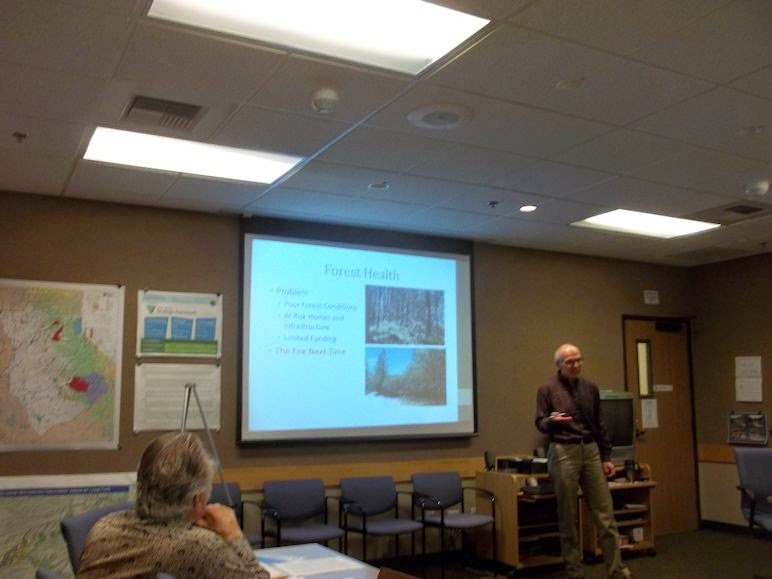
Forest Health Presentation at BLM RAC Meeting


The Yosemite Collaborative Working Group created an excellent 13 minute video as a case study of the 2013 Rim Fire.  The Fire Next Time has excellent footage and narratives from FS, timber, and conservation representatives.

THE FIRE NEXT TIME (about 13 min)


As the 2015 Fire season arrives early this year, the HQ believes it is critically important that recreationists, environmentalists, government officials, agency staff, and other stakeholders craft a way to work together to support important forest health/fuel reduction efforts as a tool to help stem the size and scope of severe/intense wildfires.

The Recreation HQ thanks you for taking time to review this important film.


Wednesday, March 18, 2015

Intense Wildfire and Over Regulation Impact OHV Recreation - Letter to EPA from BRC

Closure Order - 2012 Mill Fire
Mendocino National Forest

The Recreation HQ believes it is important for recreationists to understand just how important forest health fuel projects (mechanical treatments such as logging or mastication, prescribed fire, fuel breaks) are as a management tool to help protect recreation facilities (i.e. trail catch basins, rolling dips, staging areas, etc.) from intense uncontrolled wildfires that burn mostly in the summer months. 

Many of the same regulatory agencies such as EPA and CA Air Resources Board that govern OHV engine emissions also have regulations that, for the most part,  functionally eliminate  the use of prescribed fire  to address excessive fuel loading on Forest Service, BLM, state, and private lands.

Because forest health projects are so important to both motorized and non-motorized recreation, I accepted an initiation to join FireScape Mendocino almost 3 years ago to try and find common ground with other stakeholders on fuel projects that could help reduce the threat of uncontrolled intense wildfires that often destroy OHV opportunities at areas such as Stonyford on the Mendocino National Forest (2012 Mill Fire) and Hull Creek OHV Area on the Stanislaus (2013 Rim Fire).

Mechanical Treatment
Sierra National Forest


Link to FireScape Mendocino


That interest in forest health is what prompted BRC to submit a formal comment letter to the EPA on proposed regulations that appear to only further restrict land managers from using prescribed fire as a management tool.

Link to March 16, 2015 BRC Letter to EPA (more pics etc.)

It seems that wildfire impacts to recreation and access to forest lands are often overlooked in the debate.  I believe it is time to change that dynamic. 

If you would like to see another article on fuel breaks (another management tool), you can click on the link below:

Link to QWR Fuel Break Article

Please feel free to leave a comment and share your views on this subject.

Thanks for your interest!


Tuesday, November 19, 2013

Gridlock Impacts Post-Rim Fire Federal Land Management

Recent Controlled Burn on the Mendocino NF

Having both played and worked in timber country (Humboldt County -circa early/mid 1970s), I have a strong appreciation for well-managed private and federal forest lands.  That support has only deepened over the last 24 years based on my current career as an advocate for sustainable recreational opportunities which are dependent on healthy forests.

Many of us watched as the 2012 82K acre Mill Fire burned out the core trail network at the Stonyford OHV Area on the Mendocino National Forest.   That fire closed the area to all public access – including both casual and permitted OHV activity- for one year.  For any number of reasons (planning gridlock, fear of environmental lawsuits, appeals, burdensome regulations, etc.) the Forest Service was not able to get the salvage sale out in a timely manner and any merchantable trees were destroyed by the bark beetle.

Pre-Fire Fuels/Timber Project

Today as over 200 logging trucks per day haul salvage trees off of private timber lands damaged by the 2013 257K acre Rim Fire that burned in the Stanislaus National Forest, Yosemite National Park, and other lands, not one logging truck has hauled a load from NF lands. The agency appears to be jammed up by the same political, legal, and regulatory planning-noose that plagued the Mill Fire.

Article on the Rim Fire Planning Jam

In an effort to become part of a potential solution to this stalemate,  I proudly answered the call to represent recreation on the Mendocino National Forest’s Firescape Collaborative.  This is part of the Fire Learning Network’s effort to bring diverse stakeholders together to see if we can agree on some forest health projects that can protect both the resource and other related interests such as private property owners, recreationists, and local businesses.

Example of Shaded Fuel Break Project 

Fire Learning Network

I don’t have the answer to the aforementioned planning and project gridlock.  However, it is clear to me the current paradigm is not acceptable.  Prescribed fire has been used for thousands of years to manage timber lands and must be introduced back into the environmental equation.  I believe it is also important to reintroduce both pre and post-fire timber harvest into the planning mix. 

Trail/Resource Impacts from 2012 Mill Fire

Healthy forests and vibrant local economies are concepts that should be supported by both sides of the land-use debate.  Gridlock serves neither.


Wednesday, October 23, 2013

Post Rim Fire Trail Work Update on Stanislaus NF/Hull Creek OHV Area

Post Rim Fire Trail Work on Stanislaus National Forest

With winter rains approaching in the next few weeks, QWR wants to commend agency staff on the Stanislaus National Forest for their work to stabilize or stormproof motorized routes in the Hull Creek OHV Area that were impacted by the Rim Fire.

According to an October 21, 2013 update from the Burned Area Emergency Response (BAER) program, implementation is well underway ahead of the rainy season and assessment of additional needs is ongoing. Emergency response actions being taken include falling hazard trees near roads trails and campgrounds; improving and stormproofing roads to restore drainage; repairing and constructing rolling dips (drivable dips that remove water off the road); stabilizing and repairing trails; installing public warning signs gates and barricades for public safety; applying mulch and chipping woody material to protect exposed soil; and protecting cultural and natural resources.

Example of Rolling Dip

The BAER program also stated that while these treatments will help to reduce post-fire effects it must be recognized that not all effects can be mitigated and potential threats to life and property remain during runoff events. The projects underway are listed below.

Roads/Trails:
Restoring drainage - 61% complete:
Clean the ditches and culverts
Pull floatable debris from uphill of the culverts
Water bars – helps with the drainage of water and
grading the road.

Rolling dips: (repair and construct) - 13% complete

Trails:
Erosion control measure - 46% complete
Trail stabilization - 100% complete
Hazard tree mitigation - 100% complete
Install route markers - 100% complete
Install public warning signs gates and barricades

Protection/Safety:
Hazard tree mitigation - 94% complete along priority roads.
Cultural resource protection: erosion control measures are 69% complete and hazard tree mitigation is 100% complete.

QWR again wants to commend agency staff on the Stanislaus National Forest for their work to stabilize motorized trails that are so important to the OHV community.