Showing posts with label Quiet Warrior Racing. Show all posts

Wednesday, July 12, 2017

OP-ED - Rebuttal to CNPS's Anti-OHV Political Campaign (SB 249) Article

Hillside Restoration Project - Carnegie SVRA

Op-Ed
July 12, 2017
By Don Amador

*Permission is hereby granted to reprint article

Rebuttal to CNPS Vol. 47 (July – Sept. 2017) Pro – SB 249 Political Campaign Article: Environmental Damage from OHV Activity is Outpacing California’s Ability to Repair It

LINK TO CNPS ARTICLE

This is a response to a recent California Native Plant Society (CNPS) anti-OHV political campaign (SB 249) article that was referenced (page 22) in the official California Department of Parks and Recreation Weekly Digest published on July 7, 2017.

SB 249 was crafted in the dark of night by the California Native Plant Society (CNPS) and a small group of extreme environmental groups over the course of the last two years without OHV involvement. At this time, not one OHV organization supports SB 249.

The bill fundamentally redirects this environmentally sound, highly successful and nationally acclaimed OHV program - with a recreation focus - to a non-OHV program with a preservation focus that relies on lawsuits and trail closures as primary “management” tools.

Engineered OHV Trail with OHV Bridge to Protect Stream Course
Eldorado NF - Supported by CA OHV Grant Program


Since the creation of the California OHV program with the passage of the Chappie-Z’Berg OHV Act in 1971, OHV leaders have played an important role as stakeholders each time the program has come up for sunset review and reauthorization.  OHV leadership has a wide variety of expertise in all issues relating to OHV recreation, both technical and environmental, with specific knowledge on the interaction between state and federal land management processes.

Sediment Catch Basin - Rubicon Trail
Collaborative Project between CA OHV Grant Program, Eldorado County, Eldorado NF
and OHV Recreationists

Entire sections of SB 249 significantly alter priorities in ways that are obviously unacceptable to active California recreationists. There are also numerous examples of incorrect definitions, calls for unnecessary reports and demands for duplicative agency consultation that portray a lack of understanding of the interplay already required to create best management practices for areas that host OHV recreation.

OHV Travel Management Sign - Carnegie SVRA


It is clear that CNPS and partners crafted this bill with a goal of unduly hampering and purposely setting roadblocks to a program that is world renowned for its existing high standards with regards to both recreation opportunities and environmental conditions. They want the motorized parks to be held to an environmental standard equal to the non-motorized parks – an absurdity at every level.

CA OHV Grant Funded Restoration Project
Tahoe NF

Furthermore there is no accountability for either reliably foreseen or unanticipated consequences of the drastic measures called for in the bill. Based on estimates from DPR and OHV experts, the magnitude of the costs to the state for land restoration and mitigation for federal, city and county lands, as called for by SB 249, could range from $11M to $20M per year.  Expected legal liability cost estimates could be in the tens of millions of dollars per year.

SB 249 focuses solely on management of natural and cultural resources while ignoring important recreation-related water quality and soil erosion mitigation measures and trail facility maintenance activities.

Engineered Contour OHV Trail
Carnegie SVRA

SB 249 contains errors in the description of adaptive management as it is used in conjunction with a monitoring program. To those experienced in land policy, adaptive management is an ongoing process of evaluation leading to changes in operations to improve on-the-ground conditions. Many components are part of this process, although the bill stresses solely natural and cultural resources.

Engineered OHV Trail with Rolling Dip and Sediment Catch Basin
Eldorado NF

OHV stakeholders believe that water quality, erosion and sedimentation evaluations are equally critical, although none of these important issues are mentioned. Furthermore, natural and cultural resources are mentioned many times in the bill without adequate definition which will only lead to confusion in future decisions.

CA OHV Grant Funded Meadow Restoration Project
Stanislaus NF


SB 249 seeks to prohibit use of existing roads in state vehicular recreation areas that were created by previous land owners. The bill would require the state to compile reports of accidents, citations and other infractions from all areas of the state, including federal lands, where off-road recreation occurs. This is a burden placed on no other unit of state parks, the information is not currently collected by state parks, nor is it required by any federal agency. Furthermore there is no justification for the need for this report, leading OHV leadership to conclude this is an unwarranted data collection effort that will be used by SB 249 proponents to discredit public land agencies and off-road recreationists.

CA OHV Grant Funded Multi-Use Trail
Eldorado NF


SB 249 requires the Off-Highway Motor Vehicle Recreation (OHMVR) Division to change its purpose from managing for sustainable off-road recreation to primarily managing for non-recreation focused on the protection of natural and cultural resources.
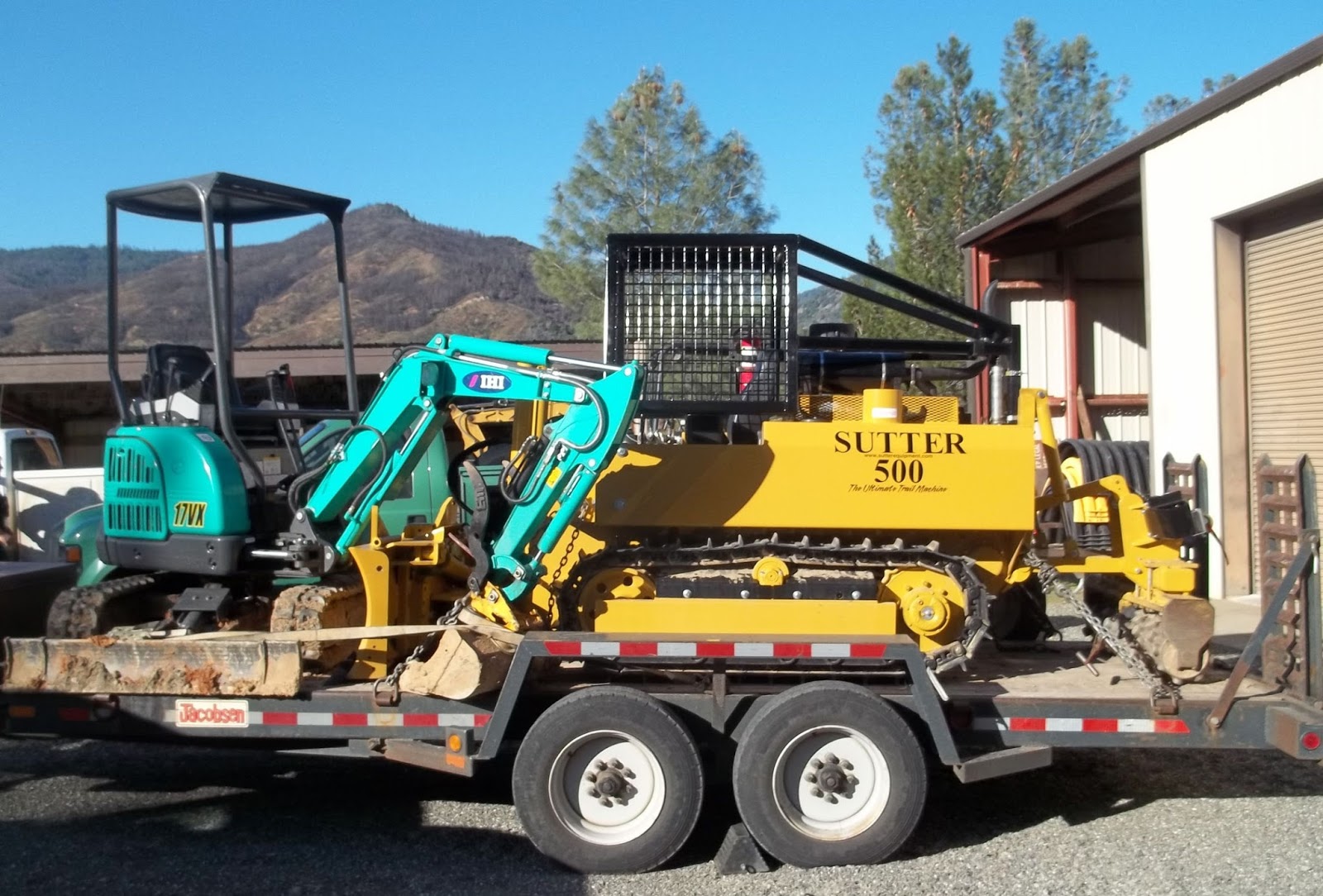
Specialized Equipment to Maintain Trails
Supported by CA OHV Grant Program

SB 249 seeks to portray and require restoration work to be done in an absolute fashion and be fully mitigated no matter the cause of the damage. Wildfires, earthquakes, rain and other weather phenomena can cause considerable damage, yet the effect of this damage is not differentiated from ongoing maintenance due to OHV activities. Other state parks are not responsible for acts of Mother Nature and it is inappropriate to place that burden on this program and this division. Minimizing impact to land from all forms of human interaction, whether through motorized or non-motorized activities is a goal already undertaken by all park units to the extent possible.

Sanitation Facilities to Protect Water Quality - Supported by CA OHV Grants
Rubicon Trail - Eldorado NF

SB 249 adds numerous agencies for consultation and written reports as requirements to be produced, which does nothing to improve environmental conditions on the ground. The redirected time will make performing environmental activities and restoration difficult, be extremely time consuming and add a considerable cost consideration for all entities concerned when there is no indication that anything is amiss in the current program.

CA OHV Grant Funded Restoration Project 
Stanislaus NF

The OHMVR Division does much more than manage State Vehicular Recreation Areas (SVRAs).  Its efforts include everything from law enforcement to supporting the economic viability of rural counties.  The program also supports OHV recreation on lands managed by the Forest Service, Bureau of Land Management and counties.

CA OHV Grant Program Supports County LE/Search and Rescue Programs

Again, I believe the regulatory mandates and related compliance requirements place the entire program (SVRAs and units managed by the USFS/BLM/counties) in both legal and fiscal jeopardy.  The legislation creates a target rich environment for future litigation based on the alleged failure of the OHVMR Division and other units to comply with a host of new and unwarranted regulations and reporting schedules.

OHV organizations are urging legislators and the Governor to support reauthorization of the current program that was substantially improved upon 10 years ago in a bipartisan manner under the leadership of Senator Darrell Steinberg (SB 742).

Don Amador was a member of the 2007 bipartisan legislative team that drafted SB742 upon which the current OHV program is based.  Don works as a consultant to the BlueRibbon Coalition/Sharetrails.org.  Don is president of Quiet Warrior Racing, a recreation consulting business.  Don is a 2016 inductee into the Off-Road Motorsports Hall of Fame.  Don was also an OHMVR Commissioner (1994-2000) Don may be reached by email at: damador@cwo.com


Sunday, December 7, 2014

Are you "Trail Proud?"


As I enter 25 years of service with BRC and QWR celebrates its 5th year anniversary in 2015, I believe that OHV has a lot to be proud of.

OHV is no longer relegated to the political sidelines like we were during the Spotted Owl battle in the early 1990s.  Motorized recreation has matured and now joins other public land stakeholder groups as a respected and important member of the land use equation.

Being “Trail Proud” is a term that OHV should consider adopting as a way to express our passion for the sport and to codify our belief that responsible motorized recreation on designated roads, trails, and areas is here to stay.

Friday, April 4, 2014

Public Comments for CA OHV Grants Ends on April 7, 2014 - Send in a Comment Now


The Recreation HQ wants to send out a simple reminder about the public comment period for the CA OHV Preliminary Applications for the 2013/14 Grants and Cooperative Agreements Program that ends on April 7, 2014.

This is your chance to submit a comment letter. HQ believes it is important for local users to review the preliminary grant applications and offer your views.   It is a great time for your club to weigh in with a support letter for those land agencies that are trying to offer the OHV community some high quality managed motorized use on roads, trails, and areas.

Please go to the CA OHV Grant website below and follow the directions.  You will see that many units have not yet received a single comment letter.

CA OHV Grant Website

You don’t have to comment on every single grant, but please try and comment on the riding areas that you like to frequent.  Agency recreation staff and leadership read each one of these letters and I believe it is important for us to let them know that we appreciate their effort.

Thanks for your review of this request.

Friday, December 13, 2013

Movie Review - Why We Ride - A Cinematic MRI of the People and Sport

Memories - Visiting with My Off-Road Hero, Malcolm Smith

After experiencing the new movie – Why We Ride – yesterday at its Sacramento debut, I did not get much sleep last night because I was so pumped up by the film and was looking forward to sharing my thoughts about it with you today.

Memories - Riding with my son, Jonathan, and his friend, Robby Edwards


I don’t want to give away too much of the movie.  However I can tell you that for us motorcyclists, the film explores, explains, and captures the very essence of what it means to be a member of the motorcycle family.  It takes the viewer on a journey through time.  From the sport’s humble beginnings where racers competed on wooden tracks in 1905 to family motorcycle campouts at OHV areas, the movie delves into the people of the sport.   It is cinematic MRI that unveils the passion we feel for the sport.

Memories - Riding with my wife, Ellen, last summer

Who should see this movie?

Motorcyclists – It is preaching to the choir.  Bring some Kleenex for those warm tears of joy and happiness.

Future Motorcyclists – It provides the elements needed to germinate that dormant “motorcycle gene” that might be part of your DNA.

Land Agencies – It is a must see for agency recreation staff, line officers, and specialists who are involved in managing OHV recreation.  It will help you understand the people who enjoy off-road motorcycles.

Stakeholder groups – For environmental organizations, conservation groups, outdoor industry, and media, it will help you better understand (and maybe even appreciate) the passion  we feel when riding on trails, carving canyons, touring, camping with the family, or participating in a permitted event.

Memories - Exploring the Backcountry

Here is a link to the movie trailer

Find out where it is playing and see it live (or get it for a club or org. viewing)


Memories - Cooling off after death trail ride in 113 degree heat

Please feel free to post a comment after you have seen the film.

Thanks,

Don


Wednesday, December 11, 2013

Santa Says Attend CARB/Red Sticker Meetings in Fresno and Diamond Bar


Before your Trail Santa can leave the Recreation HQ to deliver Christmas presents to the OHV community, he needs you to attend the CARB/Red Sticker Meetings next week in Fresno and Diamond Bar.

As many of you know, the CA Air Resources Board has started a 2 year project to review/analyze both the evaporative and exhaust emissions from the “Red Sticker” family of off-highway motorcycles.

I attended the 1st of three public scoping meetings that ARB is holding throughout the state.  There was solid representation in Sacramento from the MIC, OHV Division and Commission, and user groups. The next two meetings (with directions) are listed below:


Having worked through the 1997 red sticker debate/fight where the concept of a functional ban of 2-strokes was being considered by the regulators, I was pleasantly surprised by the collaborative and cooperative attitude of ARB staff.  They stated that a BAN as a solution is not being considered nor is it a goal. As a side note, several of them are avid motorcyclists.

ARB staff made it clear that they want to work with us (OEMs, aftermarket, dealers, user groups) in this review process with an end goal of presenting (Dec. 2015) the ARB board with some “common sense” proposals to address red sticker motorcycle emissions with a special focus on evaporative/diurnal emissions.

They are asking for our help via information as to red sticker usage, percentage of 2-strokes vs. 4 strokes, MX/closed course vs. amateur events on public lands, etc.  They are also looking for cost-effective and non-bulky engineering ideas such as small in-frame charcoal canisters, one way check valves, non-permeable plastics/tanks, etc. to address diurnal emissions.  ARB is also looking for suggestions related to their testing parameters.

They will also be analyzing the red sticker issue in a holistic manner by looking at new mitigating factors such as most ATVs now have stringent EPA-mandated emission controls, growing number of red sticker motorcycles that use fuel injection/closed fuel systems,  low emission 2-stroke oils, etc.

ARB staff is also interested in the current economic state (i.e. sales) of red-sticker motorcycles and related industry. Could new regulations kill production of youth motorcycles?  I think it will be important for them to hear from dealers and others on this particular issue.  It seems they are under the impression that off-road motorcycle sales are going gangbusters when just the opposite may be true.

Although this project is mostly focused on analyzing red sticker motorcycles, they plan to test some green sticker motorcycles as a control group.  These initial scoping meetings are just the beginning of the process and I strongly encourage red sticker-related stakeholders to get engaged with this process.  It is a rare item for a regulatory agency to undertake this sort of user-friendly approach.

The proof will be in the pudding (or gas tank in our case) on just how collaborative this process will be.  But for now, we should get engaged and offer our ideas/solutions related to the red sticker program/vehicles. 


Merry Christmas,

Your Trail Santa

Wednesday, October 23, 2013

Post Rim Fire Trail Work Update on Stanislaus NF/Hull Creek OHV Area

Post Rim Fire Trail Work on Stanislaus National Forest

With winter rains approaching in the next few weeks, QWR wants to commend agency staff on the Stanislaus National Forest for their work to stabilize or stormproof motorized routes in the Hull Creek OHV Area that were impacted by the Rim Fire.

According to an October 21, 2013 update from the Burned Area Emergency Response (BAER) program, implementation is well underway ahead of the rainy season and assessment of additional needs is ongoing. Emergency response actions being taken include falling hazard trees near roads trails and campgrounds; improving and stormproofing roads to restore drainage; repairing and constructing rolling dips (drivable dips that remove water off the road); stabilizing and repairing trails; installing public warning signs gates and barricades for public safety; applying mulch and chipping woody material to protect exposed soil; and protecting cultural and natural resources.

Example of Rolling Dip

The BAER program also stated that while these treatments will help to reduce post-fire effects it must be recognized that not all effects can be mitigated and potential threats to life and property remain during runoff events. The projects underway are listed below.

Roads/Trails:
Restoring drainage - 61% complete:
Clean the ditches and culverts
Pull floatable debris from uphill of the culverts
Water bars – helps with the drainage of water and
grading the road.

Rolling dips: (repair and construct) - 13% complete

Trails:
Erosion control measure - 46% complete
Trail stabilization - 100% complete
Hazard tree mitigation - 100% complete
Install route markers - 100% complete
Install public warning signs gates and barricades

Protection/Safety:
Hazard tree mitigation - 94% complete along priority roads.
Cultural resource protection: erosion control measures are 69% complete and hazard tree mitigation is 100% complete.

QWR again wants to commend agency staff on the Stanislaus National Forest for their work to stabilize motorized trails that are so important to the OHV community.


Monday, September 30, 2013

D.C. Budget Fight Could Impact OHV Recreation


As the threat of a government shutdown looms at midnight tonight, HQ is concerned that OHV recreation (especially permitted events) could be an unintended victim in this fight.

While many, if not most, national parks are expected to be closed, HQ believes it is unclear just what will happen at OHV areas managed by the Forest Service and BLM. 

There are many federal OHV riding areas  that could be impacted. At developed sites, will garbage be picked up?  Will the bathrooms be cleaned?  Will there be resource protection or law enforcement officers patrolling the unit?  Will there be recreation staff available to answer questions or hand out a map?  On units funded by state OHV grants, will those dedicated monies be used to keep an area open during the shutdown?

HQ does not believe the FS or BLM will barricade county or state roads that enter public lands, but this could result in the agencies cancelling any permitted OHV events that are scheduled during the shutdown.

Stay tuned as the budget battle continues in D.C.


Wednesday, September 4, 2013

Join the BFGoodrich Family - May the FORCE Be with You on the Trail

Cool Contents of BFG Force Welcome Trail Bag
 
 
While Congress is still out for their summer recess, HQ wanted to share some fun stuff with you before the legislators come back to D.C.
 
As many of you know, the folks at BFGoodrich are big supporters of OHV access efforts to help keep trails open and to promote responsible use of public lands.
 
BFG Tire FORCE is a new forum where OHV enthusiasts can keep up to speed on how us motorized users are "playing" on public lands.
 
HQ is encouraging riders to join BFG Force Family and join in on the conversation.  To join the Force and set up your profile, go to: www.bfgoodrichtiresforce.com
 
May the Trail FORCE be with you!


Monday, July 15, 2013

Amador on Bike Week Radio Show - Topics: OHV grants, DS motorcycles, leadership at state parks, grant scandal, Imperial Dunes, 2014 midterms


HQ’s, Don Amador, had a radio interview yesterday with the gang at Bike Week Radio.  Scott Cox and the crew at the station started the show off with KTM’s Kurt Caselli who was followed by motorcycle legend, Peter Starr.


We talked about a lot of important issues during my “OHV” segment at the end of the show.  Topics covered  includes: OHV Grants being adjusted back to 31M, buying a dual-sport motorcycle (Factory plated vs. bikes that comply with 2003 DMV cutoff rules), new leadership at state parks and OHV division, 2012 state park scandal,  Imperial Sand Dunes reopening 50K acres and legal history of that fight,  and 2014 midterm elections.


Amador’s segment starts at 47:31 at the show’s archive link for the July 14 Show
http://www.bikeweekradioshow.com/archive.html


Thanks for your interest and support!


# ##


Monday, July 8, 2013

CA/NV Summer Fun Events for Dual-Sports, Adventure Bikes, ATVs, SUVs, UTVs, and 4x4s

Typical View on Ride Reno 200
 
A number of great Dual-Sport and 4x4 events are occurring this summer and it would be impossible to mention them all.  However, QWR is planning to attend two events that feature diverse OHV opportunities for dual-sport, adventure bike, SUV, ATV, UTV, and 4x4s.
 
The Dust Devils Motorcycle Club is hosting its 2013 Ride Reno 200 Dual Sport Ride on September 13-15, 20-13.  It is an AMA National Event and this year it also has loops for adventure bikes.  QWR and its Sound Trails Initiative will be there with its Quest sound testing equipment to offer the SAE J-1287 20-inch sound test for the event to help educate riders about using sound compliant exhaust systems.
QWR Sound Education Station at Previous Event
 
This ride takes you up into the Sierra Nevada Mountains where you will see spectacular forested lands and back through the high desert where wild mustangs can often be seen.
 
2013 Ride Reno 200
 
Jeeps Driving in the Sierra
 
QWR will also be at the 2013 Sierra Trek hosted by the California Association of Four-Wheel Drive Clubs.  This event runs from August 8-11, 2013.  According to the club, Sierra Trek is the granddaddy of all Cal 4 events. It is held in Northern California near Truckee. The event takes participants over the famous Fordyce Trail and the surrounding areas via SUV, ATV, modified 4x4 vehicles and dedicated trail rigs.
 
2013 Sierra Trek
 
Cal 4 is working hard to introduce new and fun activities for families that we know you will enjoy. You can still run the Fordyce trail with the confidence that the trail staff will make your adventure memorable!
 
Cal 4 is also bringing back two-day SUV and the ATV/UTV runs in additions to the challenging 4x4 trail rides.
 
QWR and STI will also be at this event and will be making the SUV adventure touring runs. We will also be manning the BRC booth and talking with riders about responsible use of system roads, trails, and areas.  This is a great event for those who want a high elevation OHV experience in an alpine setting.
 
QWR’s Sound Trails Initiative
 
I hope to see you this summer on the trail!
 

Tuesday, May 28, 2013

Stonyford Set to Reopen June 1 - Stay on Designated Routes


The Recreation HQ is very proud of all the trail volunteers and agency staff who have worked hard since last fall to help prepare damaged routes in preparation for the long anticipated June 1, 2013 reopening of the Stonyford OHV Area to non-street legal and street legal OHVs.

 
As many of you know, this area on the Mendocino National Forest was hit hard in July 2012 by the Mill Fire which burned about 82K areas in the heart of the trail system.  As it reopens, HQ wants to remind riders to stay on the designated route network. 

Much of the natural vegetation that helped delineate the trails was destroyed in the fire.  Vegetation that once obscured old skid roads and closed routes that are not part of the designated trail network is also gone and riders will have to pay careful attention to make sure they are on a legal route.


Staying on designated routes will be critically important in helping to keep the area open for OHV use through this summer and into the fall riding season.  There is still a lot of work to do but staying on the legal routes is one thing that you can do to help ensure continued OHV access to the area.


When you are on the trail, be sure and look for route markers that identify legal routes.  The FS staff and volunteers have worked hard to help get trails marked and install or rebuild erosion control measures such as rolling dips and catch basins.  Be sure and thank the FS staff when you see them on opening weekend.

 
HQ wishes all OHVers who have waited patiently for the area to reopen the very best and hopes to see you on the trail or at a volunteer work event.
 
# # #


Wednesday, March 6, 2013

Eldorado NF SEIS - Water Quality, Conditional Designations, and OHV

Rock Armor on Rubicon Trail
 
As OHV and other access stakeholder groups prepare comments for the Eldorado SEIS, HQ wants to remind readers that water quality-based travel management decisions – particularly in high elevation alpine-like settings – are here to stay.
 
Yesterday, BRC issued an alert/update with key concepts for affected parties to review as they prepare to file comments on the SEIS.  One of those ideas is “conditional designation” or pre-designation of routes once relevant mitigation measures are implemented.
 
BRC Alert with Key Concepts on Eldorado SEIS (link to 11 year Eldo legal fight there too)
OHV Bridge at Mace Mill OHV Area
 
OHVers already have examples of water-based legal and political battles at the Rubicon Trail, Mace Mill OHV Area, Minimization Criteria in the Stanislaus legal case, and Carnegie SVRA just to name a few.  Implementation of water-based mitigation measures (trail reroutes, hillside stabilization, bridges, barriers, construction of contour trails, armored trails in riparian areas, etc.) have been critical in those areas to keep trails open.
 
Link to QWR’s Recent Blog with Photos of Carnegie SVRA Mitigations
 
Overview of the “Minimization” Issue in the Stanislaus NF Legal Case
 
Contour Trail at Carnegie SVRA


HQ believes that conditional designations are an effective tool in travel planning.  Several Forests have adopted that prescription to restore access to historic motorized trails in alpine areas.  Also, our good friend, Steve Pretzel, the Director for Trail Bike Management in Australia, has addressed water-quality and other environmental and political issues to enhance OHV recreation in that country.  Trail crews at various state and federal agencies and private firms including the folks at Trails Unlimited and RecConnect spend a lot of their time installing water-based mitigation measures.
 
Link to Inyo NF Conditional Designations
 
Link to 2012 NOHVCC Conf. where Pretzel, Trails Unlimited, et al gave presentations
 
Given the current and foreseeable political, regulatory, economic, and legal climate, OHV user groups and clubs will have to work even harder with land management agencies and partners on efforts to address water-based environmental concerns that will “minimize” trail closures and maximize trail opportunities.    


Sunday, December 16, 2012

Merry Xmas from QWR and 2013 Sponsorship Opportunities

Very warm Merry Christmas and Happy New Year wishes to all the readers at the Recreation HQ and supporters of QWR.

Here is a Christmas Card and info on 2013 Sponsorship Opportunities for Users and Small Business Owners.

QWR Merry Christmas and Sponsorship Info
http://myemail.constantcontact.com/Merry-Christmas-and-2013-Sponsorship-Opportunites.html?soid=1109092517671&aid=wylWGU6fX7k


Merry Christmas!

Don Amador

Tuesday, October 23, 2012

Stonyford - Mill Fire Update - Good and Bad News!

View of Trails 40, 32, and 34 from M5
 
View of Trail 33 Near Mill Valley Campground
 
The Recreation HQ got to spend a few days up at Stonyford last week touring (and working too) the burn area with FS staff.  We reviewed the good, the bad, and the ugly of the Mill Fire and looked at the extent of the damage and some of the challenges the agency must address before reopening it for public use.
 
The good news is that the campgrounds at Fouts and Davis Flat are open for camping.  Non-street legal OHVs can use Trail 42 that is a loop next to Davis Flat.  However at this time, there is no access to the main trail/road network (i.e.  Trails 34, 32, 40,37,39, or the shortcut to M5).  In fact, M5 remains closed at this time.
 
If you have a dual-sport you can ride up M10 and get on the trails/roads that are open (i.e.  Trail 6, 8,12,45, etc.).  If you have non-street legal OHVs, you can trailer them up and park along M10 where
it becomes a mixed-use road.   That begins just past the junction of where the Letts Lake Road intersects with M10.  Now is a good time to take the OHV corridor over to the Upper Lake OHV area and explore some of those trails.
 
The bad news is the main trail network that got burned looks like it will remain closed through the winter so that portions of the routes that have to be restored  after getting blitzed by the bulldozers cutting firebreaks can heal.
The ugly news is there are a lot of potential impacts to the roads and trails from excessive soil erosion if the area gets hit with heavy rains.  For example, a lot of tree stumps burned down to the root systems which often cross a road or a trail.  Now with the stump/root gone, there is the potential for water to carve or gully up the road/trail bed.
Stump/root burnout on road
 
There are a number of volunteer days still ahead where you can help.  Here is a link to where you can sign up.
 
HQ Blog with Vol. Dates and Sign Up Info
 
HQ believes that after these initial rains, the agency should make it a high priority to open up several corridors ASAP (i.e. Potato Hill and M5) so that riders can access the trails that are open in the non-burned areas.
 
HQ also wants to thank the agency and state trail crews that have been working very hard since the fire to help bring the impacted trails up to specs.
 
Watch for an update soon on the 1st volunteer trail day last week.  We had a great turnout!


Sunday, August 5, 2012

Stonyford August 5 Update - Send in Volunteer Forms


The Recreation HQ does not want riders to think it is still not focused on the Mill Fire’s impacts to the Stonyford OHV Area.   As most of you know, this fire’s impacts are almost 180 degrees opposite of the 2001 Trough Fire.


The Trough Fire did not impact that much of the trail system, but it did nuke the various OHV camping and staging areas at Fouts Springs.  On the other hand, the Mill Fire spared the Fouts Springs campgrounds but fried about 80% of the popular trails between Fouts to Lett’s Lake and back down to Little Stony.


Link to Closure Order and Closure Map
http://www.fs.usda.gov/Internet/FSE_DOCUMENTS/stelprdb5382658.pdf
 

I think a lot of us are still in a state of shock as are many of the FS employees that I know.  While they continue to mop up and restore the area, it is important for those of us who can… to send in a volunteer agreement to Paige to help with future volunteer projects.
 

Here is an announcement from Paige
 

Thank you for eagerly extending a helping hand for the process of cleaning up the devastation of the Mill Fire.


We are currently awaiting the full report from the BAER (Burned Area Emergency Response) Team.

As soon as we get permission to enter the area and start closure & rehabilitation work, I will email you with some dates.


The first project in order will be to secure the perimeters of the fire.  Access to the trail system will need to be closed with signs and straw bales along the intersections of M-10, 17N02 & Goat Mountain.  Theses main roads hopefully will be opening soon.  Not until the fire is called out, which most likely will be after we get rain, will we be able to start trail rehabbing.


I have attached a volunteer agreement which will need to be completed prior to any volunteer work that you do for the Forest Service.

Thanks again and I will be in touch soon!
 

~Paige


Paige Makowski
Mendocino National Forest
Grindstone Ranger District
O.H.V Recreation Technician
(530) 963-1328

Complete the OF301a Volunteer Agreement Form linked below and send to:

Here is the link to the volunteer form
Paige Makowski
Mendocino National Forest
825 N. Humboldt Ave.
Willows, CA 95988

If you would like to sponsor or support QWR’s post-fire recovery work (e.g. travel, supplies, seed money for matching grants, etc.) you can donate at and ID donation for "Mill Fire Recovery"

HQ is already planning to dedicate some serious time up there once the volunteer trail rehabilitation starts.  Will keep you posted as new details come in.


Tuesday, May 29, 2012

Leadership and Strong Relationships - Key Tenets of ECR2012


The Recreation HQ was at the 2012 National Conference on Environmental Collaboration and Conflict Resolution last week in Tucson, Arizona.   I was invited by the Center for Collaborative Policy (CCP) to give a presentation on Avoiding Litigation: Lessons Learned from USFS Travel Management Planning.
As you may remember, CCP has been the facilitator for a number of OHV recreation planning efforts including the 2002/2003 CA Route Inventory and Designation Process, the 2001/2002 CA OHV Sound Working Group, and the 2005 FS Travel Management Rule.  Some of you have participated in those sessions.

I wrote the following Op Ed on the conference last week with my key takeaways being “Leadership” and “Relationships” as important foundation blocks for successful collaboration between agencies, local government, and user groups.
Amador Op Ed – May 29, 2012 (a good read I hope)
http://www.sharetrails.org/story/2012/05/29/leadership-and-relationships-key-tenets-ecr-2012

It is my view that planning efforts based on the dry lab of routes overseen by a non-engaged Deciding Officer (usually the Forest Supervisor) are doomed to fail.

Many of you who read this blog know about those successes and failures.  Hopefully, we are entering a new era where agency staff is not simply going through the motions so they can check the “completion box” on their form.   Travel and other plans created without Deciding Officer involvement – including field review - during the pre-scoping phase are a receipt for litigation and/or judgment in the court of public opinion.

 ###

Tuesday, May 1, 2012

Has Travel Planning Become a Mental Squirrel Cage?


Bruce Babbitt, former Secretary of the Interior (Clinton Admin), once said, “The Planning Process IS the Product.”  After spending the last few weeks on various federal units working events and reviewing their OHV management prescriptions, I could not disagree more with Babbitt’s statement.

It has been my experience over the last 22 years that often times travel planning processes have and are being used as a tool to restrict or ban legitimate OHV use.  In other cases, agency staff has crafted plans in a futile effort to avoid lawsuits from environmental groups.  Sometimes, federal officers have worked hard to designate a functional trail system that both protects the resource while providing a quality OHV recreational experience, but don’t have the resources to implement the plan.

Sadly, the common thread between the aforementioned planning scenarios is that it has diverted agency staff and resources away from what I feel the goal of any travel planning process should be – on the ground management of the trail.   What good is a planning effort if there is no staff or money to maintain, construct, or reconstruct a trail? 

Sure, planning efforts are important as they help guide or direct the unit when it comes to management of the area.  However, it appears that in some cases…the planning effort has simply become a mental squirrel cage where people look busy (and they are) as the previous planning process has led to yet another planning process that drains precious staff time away from actually getting out-on-the-ground and taking care of the trail.

I think it would be wise for agency staff and stakeholders to remember that the travel planning product is on-the-ground management of our route system vs. an endless cycle of planning.

# # #